AERIAL FUTURES: GROUNDED VISIONS
OCTOBER 17-19,2016
VENICE, ITALY
PALAZZO MICHIEL


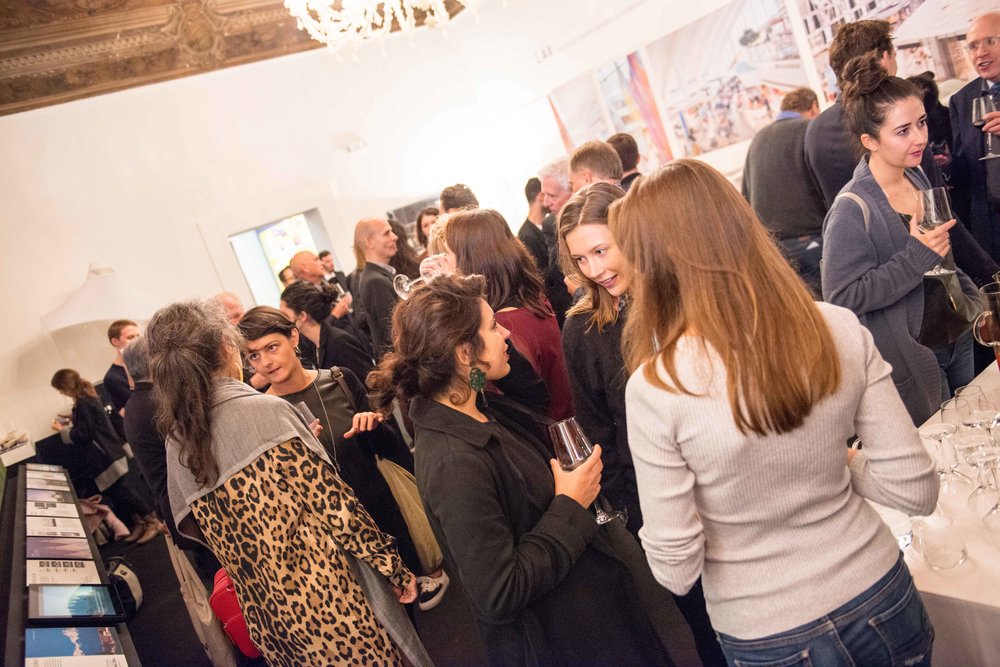
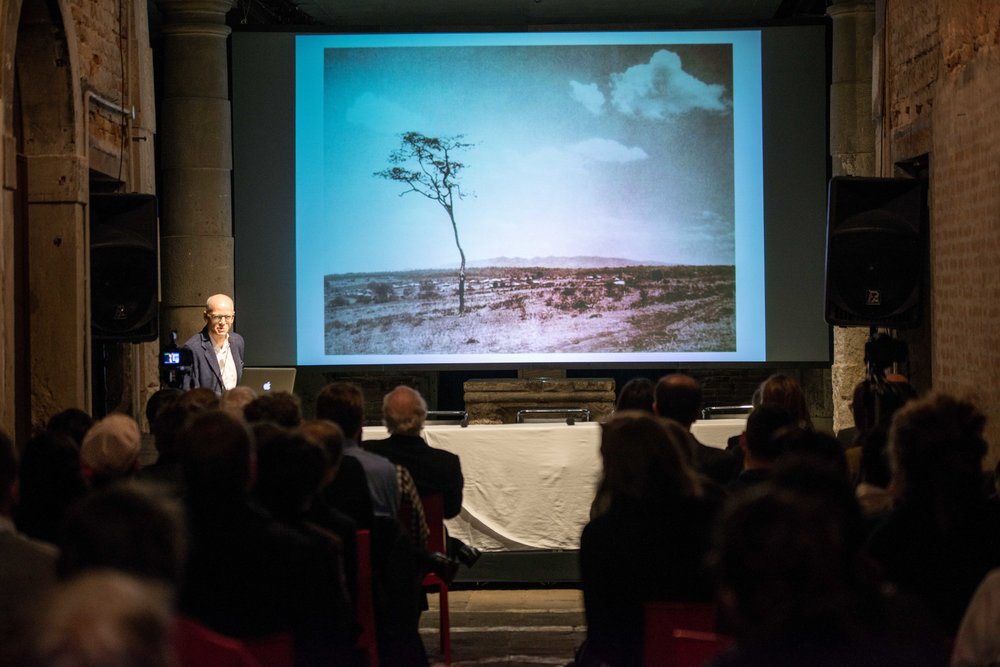
As part of the official collateral events of the 15th International Architecture Exhibition of La Biennale di Venezia, AERIAL FUTURES: GROUNDED VISIONS, Shaping the Airport Terminal of Tomorrow was a two-day symposium that took place from October 17th to 19th, 2016. The symposium brought together diverse voices in a discussion about the future of air travel, as seen through the lenses of architecture, design, technology, culture and user experience.
 
PLANE-SITE: http://plane-site.com/ European Cultural Center: http://europeanculturalcentre.eu/ Organized by the European Cultural Centre, and as part of the official collateral events of the 15th International Architecture Exhibition of La Biennale di Venezia, AERIAL FUTURES, GROUNDED VISIONS: Shaping the Airport Terminal of Tomorrow was a two-day symposium that took place from October 17th to 19th, 2016.


Keynote I:
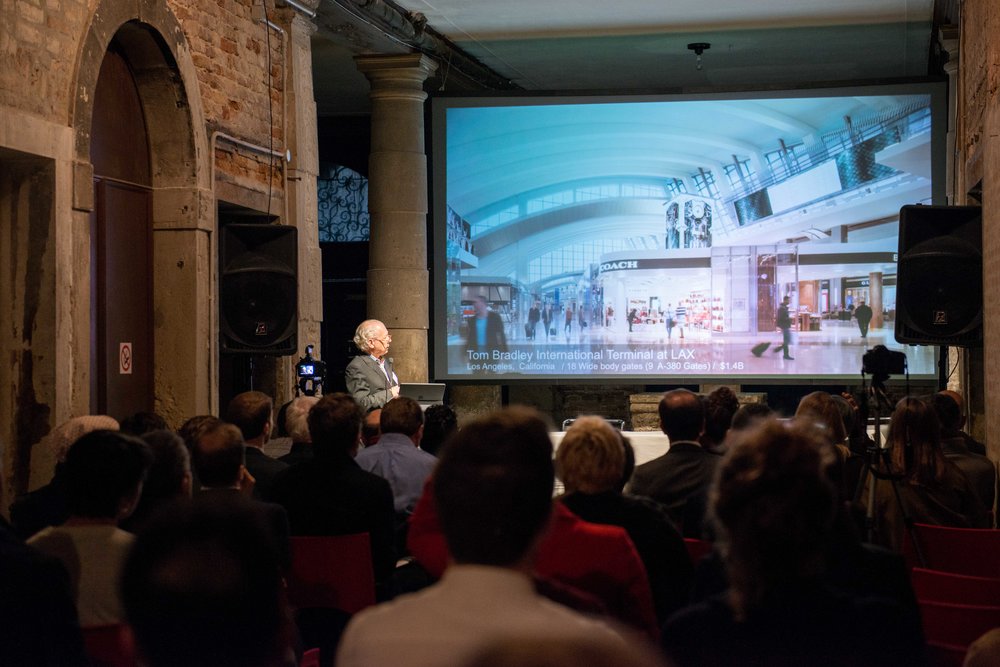
Curtis Fentress, Founder & Principal, Fentress Architects
Tuesday, october 18th, 2016

 
The realization of public architecture is easier said than done-not only because of its scale and complex program, but also because it must satisfy a diverse range of users. Though the design challenge is intimidating, the potential for impact on a massive scale is unquestionable.
 

FANTASTIC INFRASTRUCTURE: 21ST CENTURY TERMINALS                   TUESDAY, OCTOBER 18TH, 2016

We are all familiar with current terminal paradigms, from Arrivals to Departures and all of the complex spatial gymnastics in between. What do advances in technology and contemporary demands on air travel infrastructure mean for the terminals of the future - and how do past projects inform current trajectories?

Christian Henriksen, Nordic Office for Architecture
Jonathan Ledgard, The Droneport Project / EPFL Lausanne
Dr. Wayne Place, NC State University College of Design
Ashok Raiji, Arup New York

Moderated by Donald Albrecht, Museum of the City of New York

Norway's fjords and mountains make it especially dependent on aviation. While topographical conditions restrict travel by roads and railways, a strong economy enables and encourages Norwegians to travel. As airlines compete for airspace over Europe, Scandinavian airports are looking to expand and become international aviation hubs.
Most towns in the tropics will have a droneport before the year 2030. These buildings will fuel, store, load, route, repair, and birth a fleet of futuristic cargo drone craft. The droneport will be a new civic building for the 21st century - an entirely new type of airport.
Natural light and views of the outside world are crucial to creating the grand, airy spaces that help calm nervous passengers and inspire everyone who passes through an airport. Airports are built in open environments that allow for expansive, long views and for the optimal solar exposure.
The Future of Air Travel research initiative is based around a series of forums that brought together visionaries from a wide range of complementary areas across the aviation industry: operators, planners, developers, engineers, economists and technologists. These forums encouraged a more detailed and current understanding of the drivers shaping the future of air travel across socio-cultural, technological, economic, environmental and political domains.
 
We are all familiar with current terminal paradigms, from Arrivals to Departures and all of the complex spatial gymnastics in between. What do advances in technology and contemporary demands on air travel infrastructure mean for the terminals of the future - and how do past projects inform current trajectories?
 

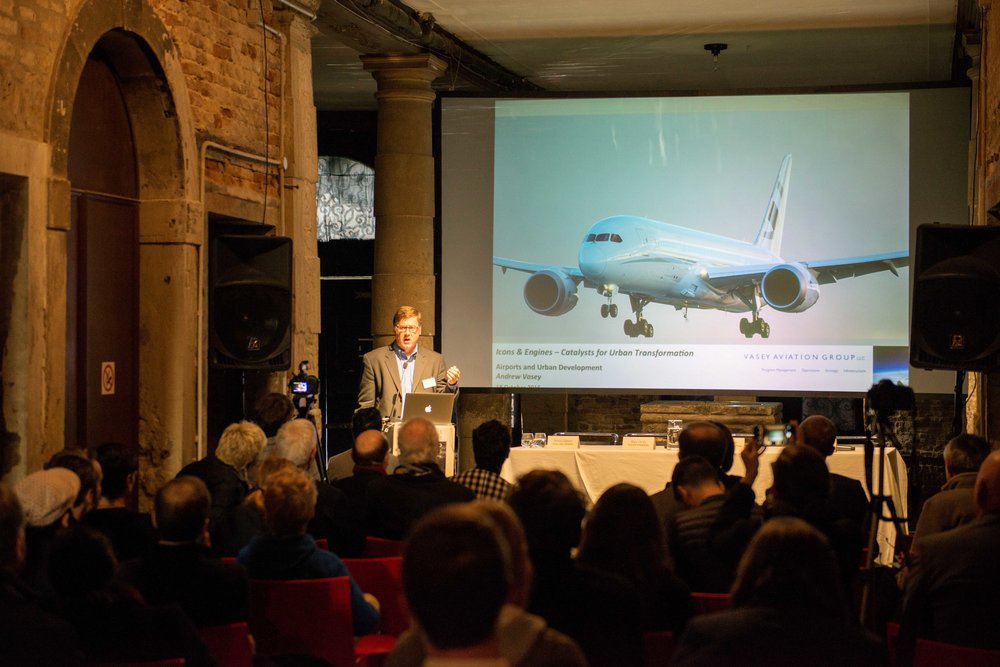
ICONS AND ENGINES: CATALYSTS FOR URBAN TRANSPORTATION
Tuesday, October 18th, 2016

The 21st century has seen an increase in high profile terminals that act as economic engines and emblematic portals for cities. In an era of global competition between cities – in addition to nations – superior airports have a significant influence. Development –and redevelopment– play a critical role defining the urban and even regional dynamics beyond the airport. How can a single building have cultural, economic and political implications?

Anna Gasco, ETH Zurich / Future Cities Laboratory
Max Hirsh, University of Hong Kong
Alex Sutton, Sevil Peach Architecture + Design
Andrew Vasey, Vasey Aviation Group

Moderated by Andres F. Ramirez, PLANE—SITE                

Since Changi Airport opened in 1981, Singapore's air traffic has grown at an astounding rate: passenger numbers have quintupled and airfreight tonnage has risen by a factor of ten. The increased airflows have been central not only to Singapore's development, but also-as this research reveals-to the growth of the greater Singapore-Johor-Riau (SIJORI) tri-national region.
In 2015, Atlanta became the first airport in the world to exceed the 100-million passenger mark. What seemed unthinkable just a few decades ago will become a reality at airports worldwide in the coming years.
Anticipating a significant rise in air travel demand in the future, this project imagines a master plan for a city airport that fully integrates itself into an urban context. It imagines a time when aviation technology might be advanced enough so that airports, aircraft and cities can coexist at a more friendly level.
Airports have become major drivers in economic development for cities around the globe. In many cases they also are the civic "front door", introducing new visitors to a city and the region every day. Airports bring jobs and payroll to cities and regions, which contribute to sales and VAT, as influencing local economies directly and indirectly.
 
The 21st century has seen an increase in high profile terminals that act as economic engines and emblematic portals for cities. In an era of global competition between cities - in addition to nations - superior airports have a significant influence. Development -and redevelopment- play a critical role defining the urban and even regional dynamics beyond the airport.
 

Keynote: Nelly Ben Hayoun, NBH Studios
WEDNESDAY, OCTOBER 19TH, 2016

 
Designer Nelly Ben Hayoun creates a space for thoughts, debate and provocation around the sociological and critical impact of new technologies. As a pioneering Designer of Experiences, Ben Hayoun questions the meaning of information today, and in global hubs such as airports. Her work demonstrates how the human condition can prevail over technology.
 

Getting to Departures: User Experience                        
WEDNESDAY, OCTOBER 19TH, 2016

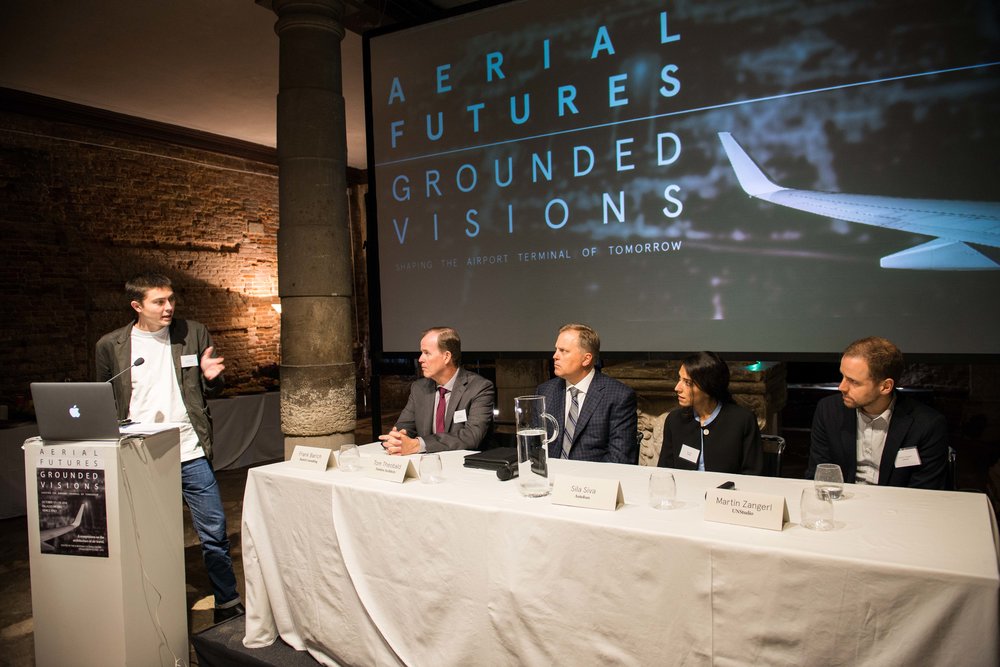
Architecture facilitates the intricate transition between airspace and passengers’ much anticipated destinations. Moving through time and space in airport terminals is still often perceived as more of an obstacle than an enjoyable experience. As interaction with terminal infrastructure  increases in frequency and engagement, airports can offer travelers choices to relieve the stress of travel. How should architects balance functional design, digital interfaces, place specificity and comfort to heighten user experiences across the board?

Frank Barich, Barich Consulting
Tom Theobald, Fentress Architects
Sila Siva, Autoban
Martin Zangerl, UNStudio

Moderated by George Kafka, &beyond collective 

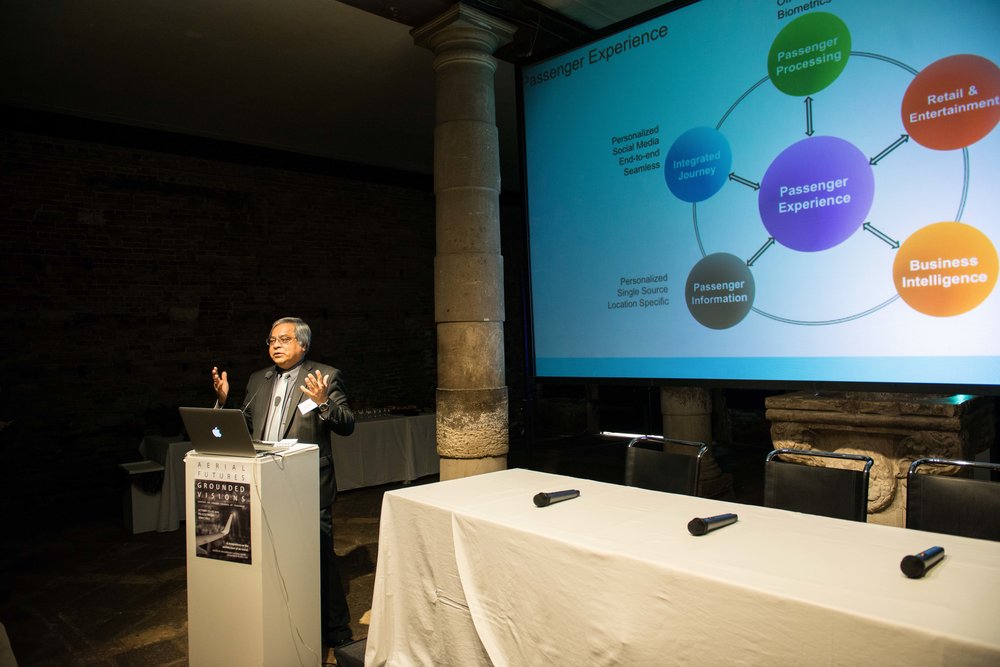
As the aviation industry continues to rapidly adopt passenger self-services, there is a growing need to design and deploy these functions in an integrated process across the entire passenger journey. This presentation provides a focus to the airport operator, airline, and key airport stakeholders in improving the passenger's journey through the entire air-travel experience.
As the airline industry and its infrastructure ages, the glamour and excitement of travel has been lost. In most instances, the travel experience has become a stress-filled event tolerated by the traveler, but not enjoyed. Designers of today need to reverse this trend.
When Autoban was commissioned to create a new international terminal for the Baku airport, the brief was to create an airport like no other... Autoban set out to do just that, devising a warm and thought-provoking contemporary vernacular that defied traditional airport design.
When designing transfer-hubs we focus on people: they pass through these hubs 7 days a week, 365 days a year. The quality of space in urban mobility projects is strongly connected to engagement at a human scale within a larger volume of spaces.
 
Architecture facilitates the intricate transition between airspace and passengers' much anticipated destinations. Moving through time and space in airport terminals is still often perceived as more of an obstacle than an enjoyable experience. As interaction with terminal infrastructure increases in frequency and engagement, airports can offer travelers choices to relieve the stress of travel.
 

Landing in the World of Tomorrow                            
WEDNESDAY, OCTOBER 19TH, 2016

A bit of speculation is essential when we consider the future of airports. Trends and demographic shifts may help forecast the future of air travel and infrastructure. If change is constant on all are fronts, what are the critical considerations when projecting future scenarios? How will architecture adapt to transformations in the aviation industry and the culture of global travel over the next century?

Miklos Deri, Drive Through Airport
Agatha Kessler, Embry-Riddle Aeronautical University
Tobias Nolte, Certain Measures
Ostap Rudakevych, Clouds Architecture Office

Moderated by Lukas Feireiss, Studio Lukas Feireiss

Within the next decade the amount of aviation passengers could double. It has been widely admitted that today's airports cannot cope with demand. Future expansion will create additional terminals causing biwger distances to travel, more congestion, pollution and increasingly slower handling times. Larger parts of the operating costs of the entire air transport system revolve around the aircraft.
What made the horse drawn carriage obsolete did not look like a horse. What will be changing the aviation industry has no wings. The confluence of mobility and technology will change how we move, and how we travel. With the unprecedented movement of people globally, we are at the tipping point of airport redesign to completely rethink the passenger experience.
Today, spatial design-of buildings, campuses, and cities-increasingly requires a data-informed and technology-accelerated strategies. Scientific precision is no longer optional-insight into complex design issues requires designers who are fluent in data.
Our atmosphere is a vaporous cyan tinted film enwrapping our planet, protecting it from the harsh hazards of outer space. With a thickness of only 1/2000th the diameter of earth, the atmosphere provides several vital functions: it sustains terrestrial life with a gaseous mix of nitrogen and oxygen, while shielding earth's surface from harmful radiation.
 
A bit of speculation is essential when we consider the future of airports. Trends and demographic shifts may help forecast the future of air travel and infrastructure. If change is constant on all are fronts, what are the critical considerations when projecting future scenarios?
 

download THE 2016 symposium's CONFERENCE PROGRAM and press release.


Thanks to the generous sponsorship of our donors, 
THIS symposium was offered free of charge.


ORGANIZATION